
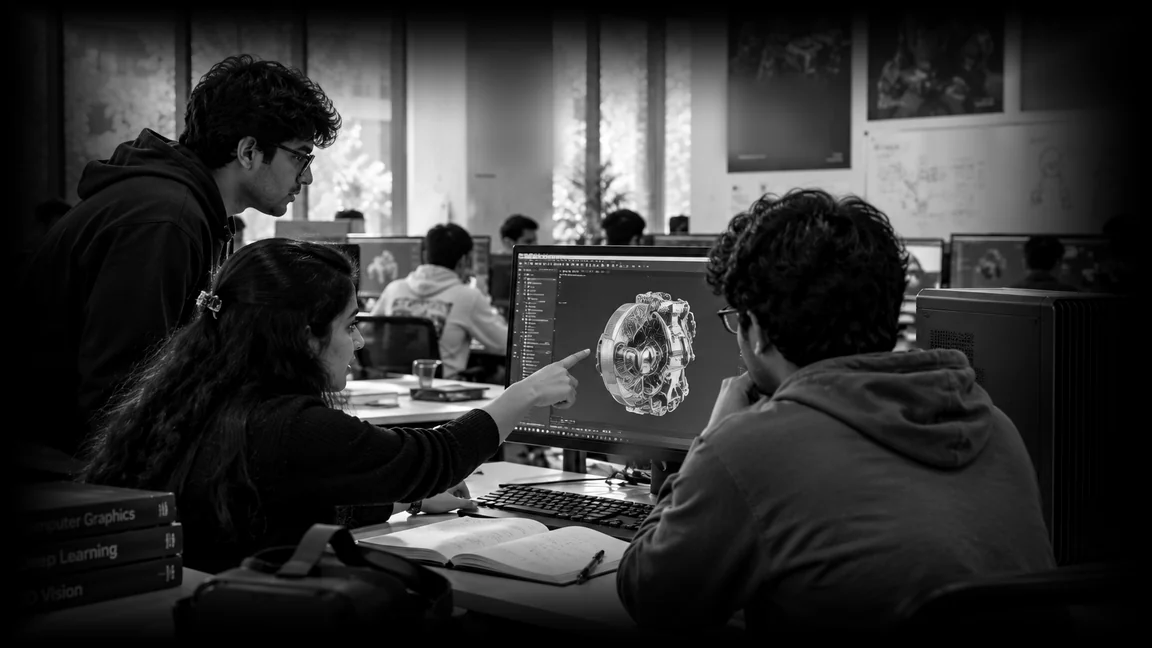
Give every student real GPU time.
AI teaching labs, shared GPU clusters and research workstations for universities, colleges and EdTech platforms.
The constraint
AI courses are taught on GPUs, yet many campuses ration a handful of cards across hundreds of students. Cloud credits run out mid-semester, and research groups end up queuing behind coursework. Institutions need capacity that is shared fairly, scheduled sensibly and owned outright.
Workloads
AI teaching labs
Equip labs with GPU workstations so every student trains and runs models hands-on.
Shared clusters for coursework
Split GPUs between many users with partitioning such as Multi-Instance GPU, scheduled through queue systems like Slurm.
Research computing
Give faculty and PhD groups dedicated nodes for training, simulation and data science.
EdTech platforms
Host tutoring models, content generation and assessment tools on your own infrastructure, with student data kept in-house.
Systems
- GLabs AI Workstations — teaching lab seats and researcher desks.
- GLabs GPU Servers — the shared cluster for coursework and research.
- GLabs Vault — datasets, home directories and course materials.
Deployed with
GLIDS for teaching labs and clusters. GLabs AI Stack for hosted model services.
Related solutionsTraining & SimulationDigital Twins & Design Walkthroughs
FAQs
How many students can share one GPU server?
It depends on the GPUs, how they are partitioned and what the course runs. With partitioning and a scheduler, one multi-GPU server can carry a whole class through notebook-scale exercises, while larger projects queue for full GPUs. We size from enrolment and syllabus.
Lab workstations or a central cluster?
Labs give students physical hardware and work without a network dependency. A cluster serves more students per GPU and supports remote access. Many institutions run both.
Can teaching and research share one cluster?
Yes. Scheduling policies can reserve capacity for each and share the rest fairly, so coursework peaks don't stall research for weeks.
How do EdTech platforms keep student data private?
Hosting models on your own infrastructure keeps student data away from third-party APIs. That simplifies obligations under India's DPDP Act, which are stricter where the learners are children.
Tell us your enrolment and syllabus. We'll size the lab.
All product and company names mentioned are trademarks of their respective owners.