
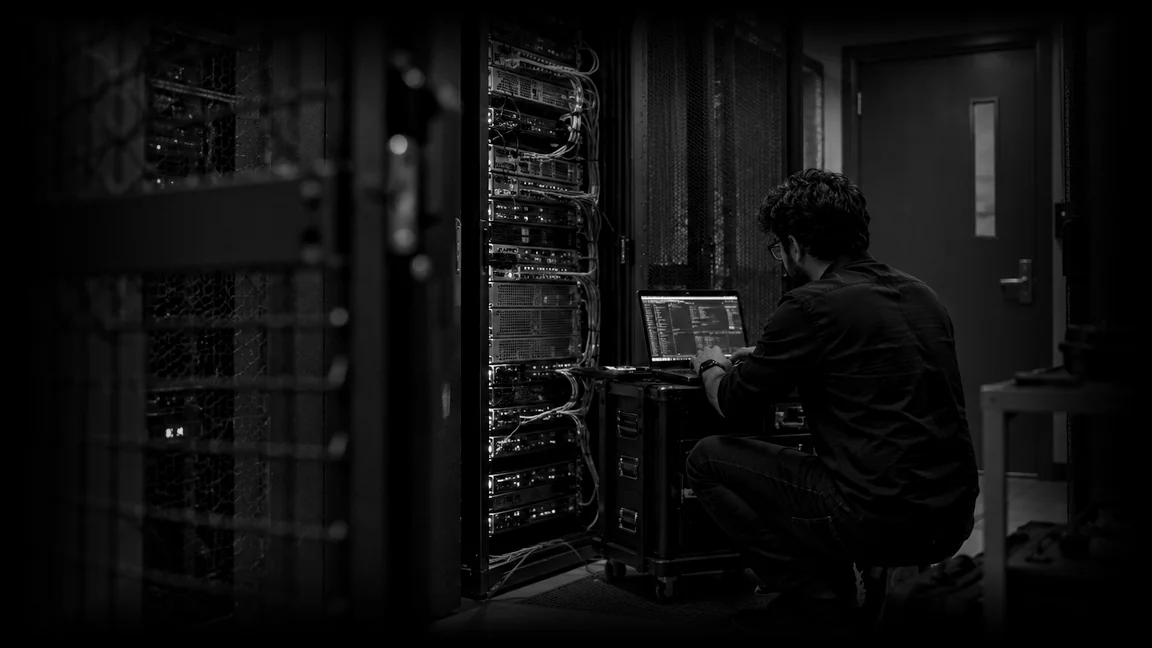
Run detection models where the data sits.
On-premises GPU systems for security analytics, private LLM copilots and model fine-tuning inside your perimeter.
The constraint
Logs, packet captures and incident records are some of the most sensitive data a company holds. Many security teams are barred by policy or regulation from sending them to a hosted model API. Bringing AI into the SOC means running it on hardware the security team controls.
Workloads
Self-hosted analyst copilots
Serve open-weight LLMs on-premises to summarise alerts, draft incident reports and query runbooks. No prompt or log line goes to a third-party API.
GPU-accelerated log & network analytics
Process high-volume telemetry with GPU frameworks such as NVIDIA Morpheus to flag anomalies, phishing and data leakage as events arrive.
Fine-tuning & domain adaptation
Adapt models on your own incident history, detection rules and threat intelligence, so they understand your environment rather than a generic one.
Retrieval over security knowledge
Index runbooks, tickets and threat reports so copilot answers cite your own sources.
Systems
- GLabs GPU Servers — inference, analytics and fine-tuning nodes.
- GLabs Vault — retention for logs, telemetry, training data and model checkpoints.
Deployed with
GLabs AI Stack. Models, serving and fine-tuning run on the GLabs AI Stack, on hardware inside your network.
Related solutionsSelf-Hosted LLM InferenceFine-Tuning & Domain Adaptation
FAQs
Can we run an LLM for our SOC without sending data to the cloud?
Yes. Open-weight models can be served entirely on your own GPU servers, so prompts, logs and outputs never leave your network. Model size and the number of analysts using it at once set the GPU count, and we size from both.
How much GPU do we need to fine-tune a security model?
It depends on model size and method. Parameter-efficient methods such as LoRA can adapt a mid-sized model on a single multi-GPU server. Full fine-tuning of a large model needs far more GPU memory. We size against the model you plan to run in production.
Does on-premises AI help with CERT-In rules or the DPDP Act?
Keeping data on your own infrastructure simplifies questions about data location and third-party processing. It doesn't make you compliant on its own; your controls and processes still have to meet each regulation.
Keep your security data where it is. Bring the model to it.
All product and company names mentioned are trademarks of their respective owners.